How to Deadlift Properly: Good Form, Common Mistakes and Protecting Your Back
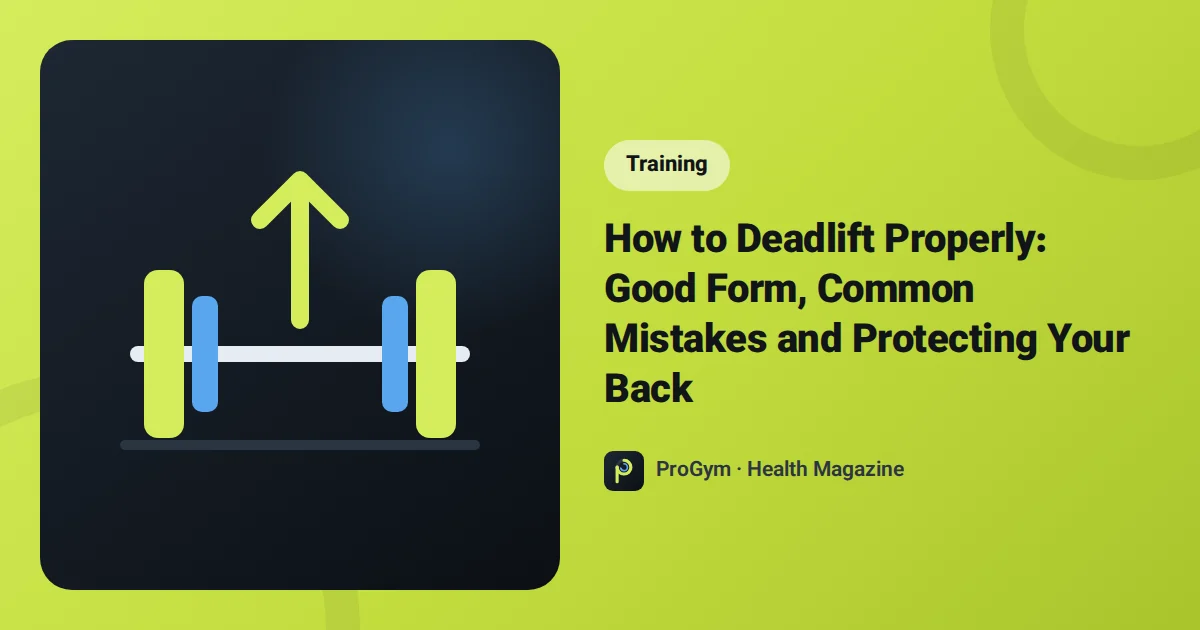
The deadlift simply means lifting a weight from the floor to a standing position. That is it, yet this simple movement works almost every muscle on the back of your body: glutes, hamstrings, lower back, upper back, forearms and even your core. It is exactly what you do every day when you pick up a box or a bag of shopping, so learning it well pays off far beyond the gym.
Plenty of people avoid deadlifts for fear of hurting their back. In reality, with good form and a sensible weight, the deadlift is a safe exercise for most healthy people. Problems usually start with going heavy too soon and with poor technique.
Which muscles does the deadlift work?
- Glutes and hamstrings: the main engine; they drive the hips forward.
- Spinal erectors: they hold your back in a neutral position.
- Lats and traps: they keep the bar close and your shoulders stable.
- Quads: especially at the start, as the bar leaves the floor.
- Forearms and grip: to hold on to the bar.
Proper deadlift form, step by step
1. Foot position
Stand behind the bar so it sits roughly over the middle of your feet. Feet are about hip-width apart with toes turned out slightly. Looking down, the bar should be over your shoelaces, not further out.
2. Grip
Hinge at the hips and grip the bar just outside your shins. To begin with, use a double overhand grip with both palms facing you. Your arms hang straight, like two hooks.
3. Set-up
Bend your knees until your shins touch the bar. Lift your chest a little and flatten your back: not rounded, not overly arched. Look at the floor a couple of metres ahead so your neck stays in line with your spine. Tighten your lats, as if squeezing an orange in each armpit.
4. Breathe and brace
Take a deep breath into your belly and tighten your abs as if bracing for a punch. This keeps your spine solid.
5. The lift
Push the floor away with your legs instead of pulling the weight up with your back. The bar travels in a straight line, close to your shins and thighs. Once it passes your knees, drive your hips forward until you are standing tall.
6. Lockout
Stand straight, squeeze your glutes and set your shoulders back. There is no need to lean back; simply standing tall is enough.
7. Lowering
Send your hips back first, then bend your knees once the bar passes them. Lower the bar under control and rebuild your set-up before the next rep. Breathe out after the hardest part or at the top.
Choosing a starting weight
Start with a light bar, or even a Romanian deadlift with light dumbbells, to learn the hip hinge. Add weight only when every rep looks the same. A simple rule: if your back rounds or the bar drifts away from you on the last rep, the weight was too heavy for today.
For beginners, 3 sets of 5 to 8 reps once or twice a week is plenty. Deadlifts are fatiguing, so there is no need to go heavy every session. For a safe way to gauge your strength, see our article on personal records and estimating your one-rep max safely.
Common mistakes
- Rounding the back: the most common and riskiest error, usually a sign the weight is too heavy or you are tired. Lower the weight.
- Letting the bar drift forward: the further the bar is from you, the more load on your lower back. The bar should slide up your shins and thighs.
- Hips shooting up first: this turns the lift into an accidental stiff-leg deadlift. Chest and hips should rise together.
- Jerking the bar: do not yank it off the floor. Take the slack out of the bar first, then build pressure smoothly.
- Leaning back at the top: it adds needless stress to the lower back.
- Looking up: it cranks your neck back. Keep your eyes on the floor ahead.
- Losing your breath mid-rep: your core softens and control drops.
Deadlift variations
- Conventional deadlift: hip-width stance with hands outside the legs, the version described above.
- Trap bar deadlift: the weight sits beside your body; many beginners find it easier to learn and gentler on the back.
- Sumo deadlift: wide stance with hands between the legs; it works the glutes and inner thighs more and keeps the torso more upright.
- Romanian deadlift: starts from the top and lowers to mid-shin, with more focus on hamstrings and glutes.
Accessory exercises for a better deadlift
If you are not yet comfortable with the deadlift, these build the foundations: glute bridges for the glutes, controlled back extensions for the lower back, dead bugs and planks for core control, and Romanian deadlifts to learn the hip hinge.
Deadlifts and back pain
With good form and gradual loading, deadlifts make your back stronger. But if you have back pain or a history of disc problems, spinal injury or surgery, talk to a doctor or physiotherapist before you start deadlifting. Sharp pain, pain shooting down a leg or numbness are signs to stop immediately. Read more in our guide to back pain in the gym.
Beginners do not need a lifting belt. Learn to brace your core yourself first; a belt, if ever needed, is for heavy sets by experienced lifters.
Track your progress
Log the weight and reps of every deadlift set in ProGym. The exercise history shows you when you are ready to add weight, and you can see your personal records too. If you are not sure your form is right, film yourself from the side with your phone or ask a coach to watch.
Bottom line: a good deadlift has the bar over mid-foot, a flat back, a braced core and the bar close to your body. Push the floor away, finish with your hips and lower under control. Start light, put form ahead of weight and see a doctor if something hurts.
Frequently asked questions
Are deadlifts dangerous for your back?
For most healthy people, deadlifts with good form and a sensible weight are safe and even strengthen the back. The risk usually comes from going heavy too soon and letting the back round. If you have a history of back problems, talk to your doctor first.
Which deadlift variation should beginners start with?
A Romanian deadlift with light dumbbells or a trap bar deadlift are good starting points, because they make the hip hinge easier to learn.
How often should I deadlift?
Once or twice a week is enough for most people. Deadlifts are fatiguing and do not need to be heavy every session.
Do I need a lifting belt?
Not as a beginner. First learn to brace your core with your breath and abs. A belt is a tool for heavy sets by experienced lifters, not a substitute for good form.
Workout and nutrition plans matched to your goal and level, free.