Daily Step Counts: Do You Really Need 10,000 Steps?
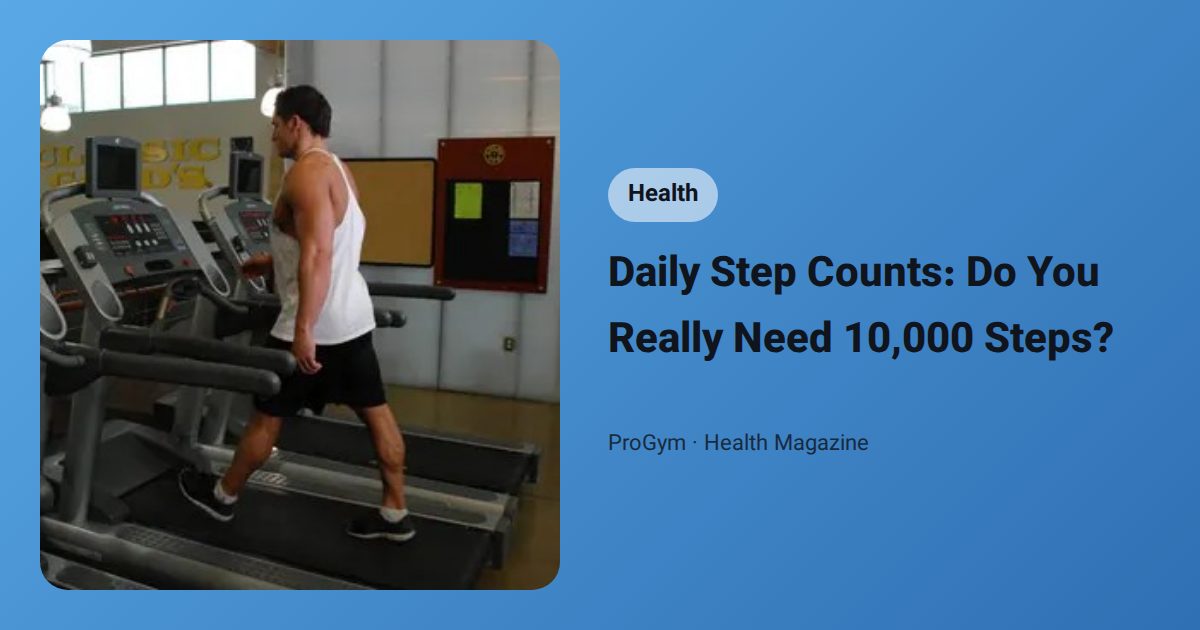
"Walk 10,000 steps a day!" You have probably heard this many times from a smartwatch, an app or a friend. But does the number have a scientific basis? And if 10,000 steps a day is out of reach, is there no benefit? The reassuring answer: every extra step helps, and you do not need to hit a magic number to see benefits.
Where did 10,000 come from?
The number has no solid scientific root. It is said that in 1960s Japan a pedometer company marketed a device called "10,000 steps," partly because the Japanese character for 10,000 resembles a walking person. The figure was catchy and round, and it stuck. Researchers later began studying it and painted a more precise picture.
What the evidence says about steps and health
Large studies and recent meta-analyses that followed thousands of people for years show a fairly clear pattern:
- The risk of early death falls as steps increase; the biggest gain comes from moving from a very low level (about 2,000 to 3,000 steps) to a moderate one.
- In many studies the main benefit appears at around 6,000 to 8,000 steps for adults over 60 and about 8,000 to 10,000 for younger adults, after which the curve gradually flattens.
- Even an increase of about 1,000 steps a day has been associated with lower risk.
- Higher daily steps help with type 2 diabetes, blood pressure and cardiovascular disease, but these studies are observational; they do not prove walking alone is the cause, since more active people often have healthier lifestyles overall.
- Walking pace (brisker steps) may offer extra benefit beyond the count.
The practical takeaway: for most adults, 7,000 to 10,000 steps is a reasonable goal, but if you currently do 3,000, reaching 5,000 is real progress. These numbers are approximate for healthy people; if you have heart, joint or any other medical conditions, set your personal goal with your doctor.
| Current level (steps/day) | Suggested next goal |
|---|---|
| Under 3,000 | Add 1,000 steps to your current average |
| 3,000 to 5,000 | Reach 6,000 to 7,000 |
| 6,000 to 8,000 | Reach 8,000 to 10,000 and add a few minutes of brisk walking |
| Over 10,000 | Maintain; add strength training and flexibility variety |
What is NEAT and why does it matter?
NEAT (Non-Exercise Activity Thermogenesis) is the energy your body spends on non-exercise activity: walking around the house, working with your hands, standing, climbing stairs, shopping and even fidgeting. It varies a lot between people and can account for hundreds of calories a day.
Interestingly, many people who train for an hour in the gym spend the rest of the day at a desk or on the sofa, so their NEAT is low and their total daily energy expenditure is lower than they imagine. Raising steps and cutting sitting time is one of the simplest ways to raise NEAT. Walking does not replace strength training, though; to preserve muscle and bone you still need resistance work 2 to 3 days a week.
How accurate is a step counter?
Phones and smartwatches usually have some error, especially when driving on rough roads or when the phone is in a bag. But they are accurate enough to see trends. Instead of obsessing over the exact number, follow your weekly average. If you log your activity on ProGym, you can watch the weekly trend and set friendly goals for yourself around the leaderboard and monthly league.
Practical ways to add steps in Iranian cities
Our urban life differs from other countries: traffic, uneven sidewalks, air pollution and hot and cold seasons. The tips below fit those realities:
- Get off before your destination: if you take a taxi, ride-hailing or the metro, get off one or two stops early and walk the rest. In Tehran and other cities with a metro this is very practical.
- Park farther away: in busy commercial areas, parking farther is both faster and adds steps.
- Do neighborhood errands on foot: the bakery, fruit shop and nearby pharmacy are good excuses for 10 to 15 minutes of walking.
- Prefer stairs to the elevator: for 2 to 4 floors, stairs add steps and raise the heart rate.
- Walk after meals: 10 to 15 minutes after lunch or dinner helps blood sugar regulation and is a nice habit.
- Take phone calls standing or walking.
- Local parks and green paths: many cities have neighborhood parks and large public gardens; choose a fixed route on weekends or go with family.
- Foothill trails: for variety, walks on foothill paths such as Darband and Darakeh in Tehran, or similar trails in your own city, are great, with proper shoes and attention to the weather.
- On polluted, very cold or very hot days: walk at home, in a parking garage or an indoor mall, or use a treadmill.
- At work: stand up for 5 minutes every hour, visit a colleague instead of calling and hold short meetings standing or walking.
A simple example: 10 minutes of walking in the morning, 10 after lunch, 15 to and from the metro station, 10 after dinner and a few flights of stairs easily add up to 6,000 to 8,000 steps, without a separate "workout" in your schedule.
Safety when walking in the city
- Wear comfortable, suitable shoes; poor shoes hurt feet and knees.
- In busy routes watch for motorbikes on the sidewalk and do not look at your phone while crossing the street.
- At night choose well-lit, busier routes and walk with others.
- On polluted days, sensitive people (children, older adults, those with heart and lung conditions) are better off exercising indoors.
- In hot weather carry enough water and avoid peak heat hours.
- If you get chest pain, severe breathlessness or dizziness while walking, stop immediately and see a doctor.
How to build the walking habit
- Record last week's average as your starting point.
- Add 500 to 1,000 steps to the average each week rather than jumping suddenly.
- Attach walking to an existing habit: "After my morning tea, I walk for 10 minutes."
- Arrange walks with a friend or spouse.
- Instead of all-or-nothing thinking, forgive low-step days and continue tomorrow.
- If you have a coach, set a daily step goal in the plan together; ProGym's Companion Coach can follow up on that goal through the week.
Walking and weight loss
Walking alone is not a miracle; 10,000 steps burns roughly 300 to 500 more calories than a sedentary baseline for most people, which one high-calorie meal easily cancels out. Still, consistent walking combined with sensible eating and strength training helps maintain weight and cardiovascular health. Discuss your nutrition plan, and any decision about drugs or supplements, with a doctor or dietitian.
Summary: The 10,000-step figure was an advertising slogan, but the evidence shows more movement is always beneficial, with the biggest gain from moving from low to moderate levels (about 6,000 to 10,000 steps). Raise your NEAT with stairs, short walks after meals and getting off earlier than your stop, increase your target gradually and consult a doctor if you have a medical condition.
Frequently asked questions
Is there no benefit if I cannot reach 10,000 steps?
There is. Evidence shows even 4,000 to 7,000 steps, and every extra thousand, is linked with lower risk of early death and disease.
Is brisk walking more important than step count?
Both matter. A brisker pace may add heart benefits, but at the start, step count and consistency matter more than speed.
Do 10,000 steps replace strength training?
No. Walking is great for the heart and NEAT, but preserving muscle and bone still needs resistance training 2 to 3 days a week.
How can I get steps on polluted days?
Walk indoors: at home, in a parking garage, in malls or on a treadmill. Sensitive people should avoid outdoor activity in polluted air.
Workout and nutrition plans matched to your goal and level, free.