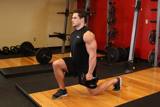
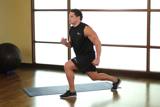
Jump Squat tutorial
The jump squat combines a bodyweight squat with an explosive vertical jump. It builds lower-body power, raises the heart rate, and fits well into home interval and conditioning workouts; it is best for intermediate trainees who can already squat with good form.
How to perform
- Stand with feet shoulder-width apart and toes turned slightly out.
- Push your hips back and squat until your thighs are about parallel to the floor.
- Swing your arms back to help balance and load the jump.
- Drive hard through your feet and swing your arms forward to jump straight up.
- Keep your body straight in the air.
- Land softly from toes to heels, bend your knees, and flow into the next squat.
Breathing: Inhale as you drop into the squat and exhale as you jump.
Key tips
- A soft, quiet landing is a sign of good control.
- Keep your knees tracking over your toes on landing.
- Prioritize the quality of each jump over the rep count.
Common mistakes
- Landing with straight, locked knees
- Knees caving inward on landing
- Continuing when very fatigued with poor form
Safety: People with knee, ankle or back pain should be cautious and can substitute a regular squat finishing with a calf raise.
Legs (quads)Primary muscle
Body weightEquipment
IntermediateLevel
HomeLocation
Assisting muscles
Suggested sets and reps
Beginner3 sets × 8–12 reps
Muscle mass4 sets × 6–12 reps
Strength5 sets × 3–6 reps
Fat burning3 sets × 12–15 reps, short rest
Pick a weight where the last 1 to 2 reps are hard but done with correct form.
Get a complete workout program
Do this exercise within a personalized program based on your goal and level.
Get a free program