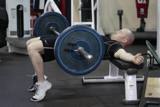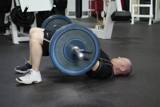
Stability Ball Hip Bridge tutorial

The stability ball hip bridge strengthens the glutes and hamstrings with your upper back resting on the ball. The instability of the ball also challenges the muscles that stabilize your hips.
How to perform
- Rest your upper back and shoulder blades on the ball with your feet flat on the floor, hip-width apart or slightly wider.
- Lower your hips slightly to feel a light stretch in the glutes and brace your abs.
- Drive through your heels and lift your hips until your body forms a straight line from shoulders to knees.
- Squeeze your glutes hard at the top and pause for one to two seconds.
- Lower your hips slowly and get ready for the next rep.
- Keep your gaze toward the ceiling and complete all reps with control.
Breathing: Exhale as your hips rise and inhale as they lower.
Key tips
- Place your feet a little farther from the ball to involve the hamstrings more.
- Keep pressure on your heels and keep your toes light.
- Keep your knees in line with your toes and do not let them cave in.
Common mistakes
- Over-arching the lower back at the top.
- Letting the ball roll because the feet are unbalanced.
- Thrusting up fast and dropping the hips on the way down.
Safety: Practice near a wall or in a safe spot until you find your balance. Stop if you feel lower back pain.
GlutesPrimary muscle
Medicine ballEquipment
BeginnerLevel
HomeLocation
Assisting muscles
Suggested sets and reps
Beginner3 sets × 8–12 reps
Muscle mass4 sets × 6–12 reps
Strength5 sets × 3–6 reps
Fat burning3 sets × 12–15 reps, short rest
Pick a weight where the last 1 to 2 reps are hard but done with correct form.
Get a complete workout program
Do this exercise within a personalized program based on your goal and level.
Get a free program