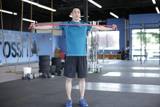
Reverse Fly tutorial
The bent-over reverse fly opens the dumbbells out to the sides while hinged forward, strengthening the rear delts and mid-back muscles such as the rhomboids. It improves posture, shoulder balance and joint health, and suits intermediate trainees.
How to perform
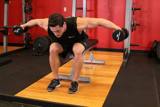
- Hold the dumbbells and hinge forward at the hips with soft knees until your torso is nearly parallel to the floor.
- Keep your back flat and neck in line with your spine.
- Let the dumbbells hang under your chest, palms facing, elbows slightly bent.
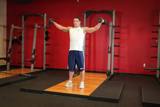
- Open your arms out to the sides in an arc until they reach shoulder level.
- Draw your shoulder blades slightly together and pause at the top.
- Lower the dumbbells slowly back under your chest.
Breathing: Exhale as you open your arms and inhale as you return them.
Key tips
- Lead with your elbows and reach toward the side walls.
- Use light weights; the rear delt is a small muscle.

- Rest your forehead on an incline bench for more stability.
Common mistakes
- Letting the torso rise during the set and swinging the weight.
- Rounding the back in the bent-over position.
- Over-squeezing the shoulder blades, shifting work away from the rear delts.
Safety: People with back pain should do it chest-supported on an incline bench or on a reverse pec-deck machine.
ShouldersPrimary muscle
DumbbellEquipment
IntermediateLevel
Gym and homeLocation
Assisting muscles
Suggested sets and reps
Beginner2–3 sets × 12–15 reps
Muscle mass3–4 sets × 10–15 reps
Strength3 sets × 8–10 reps
Fat burning3 sets × 15–20 reps
Pick a weight where the last 1 to 2 reps are hard but done with correct form.
Get a complete workout program
Do this exercise within a personalized program based on your goal and level.
Get a free program