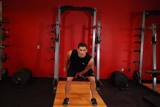
Kettlebell Thruster tutorial
The kettlebell thruster combines a front squat and an overhead press into one smooth, continuous movement. The drive out of the squat carries into the press, working the legs, glutes, shoulders and triceps together; it is highly effective for building conditioning and overall fitness in intermediate trainees.
How to perform
- Hold one or two kettlebells in the rack position at your shoulders with elbows close to your body.
- Stand with feet shoulder-width apart and brace your core.
- Squat down with an upright torso until your thighs are about parallel to the floor.
- Drive powerfully through your legs to stand up.
- Use that momentum to press the kettlebells overhead until your arms are straight.
- Lower the kettlebells under control back to the rack and flow into the next squat.
Breathing: Inhale as you descend into the squat and exhale as you drive up and press.
Key tips
- The press should be a natural continuation of standing up, not a separate move.
- Finish overhead with the arms beside the ears, stacked over the body.
- Keep the elbows pointing down and forward during the squat.
Common mistakes
- Leaning the torso forward in the squat
- Overarching the lower back during the overhead press
- Pausing between squat and press, losing the power transfer
Safety: People with shoulder or back problems should use a light kettlebell or perform goblet squats and seated presses separately.
Full bodyPrimary muscle
KettlebellEquipment
IntermediateLevel
Gym and homeLocation
Assisting muscles
Suggested sets and reps
Beginner3 sets × 8–12 reps
Muscle mass4 sets × 6–12 reps
Strength5 sets × 3–6 reps
Fat burning3 sets × 12–15 reps, short rest
Pick a weight where the last 1 to 2 reps are hard but done with correct form.
Get a complete workout program
Do this exercise within a personalized program based on your goal and level.
Get a free program